



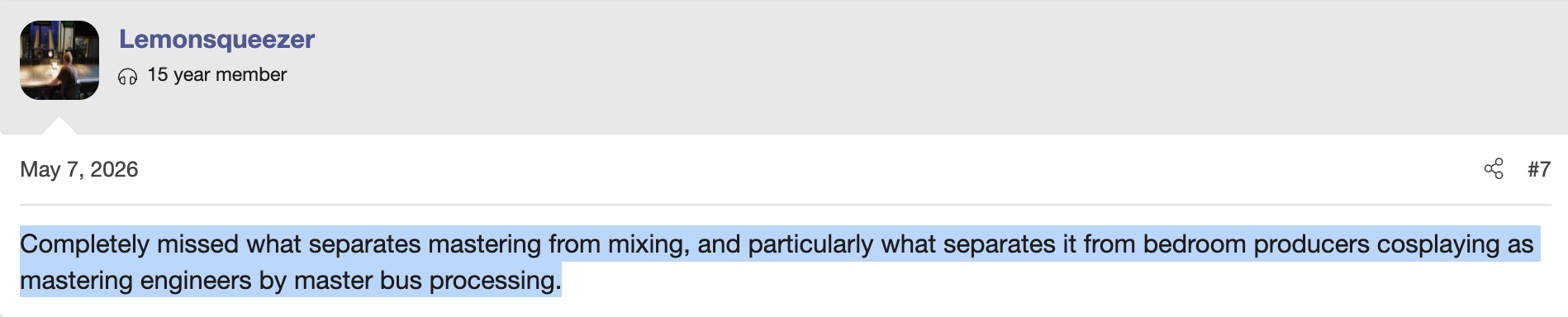
Earlier this year, my article “What is Modern Mastering?” kicked off a discussion on Gearspace. There’s more in there than I can touch on in one article, but one recurring idea had to do with the difference between self-mastering and mix bus processing. GS user Lemonsqueezer was skeptical of the article:
Meanwhile, Moostapha took a more pragmatic view:
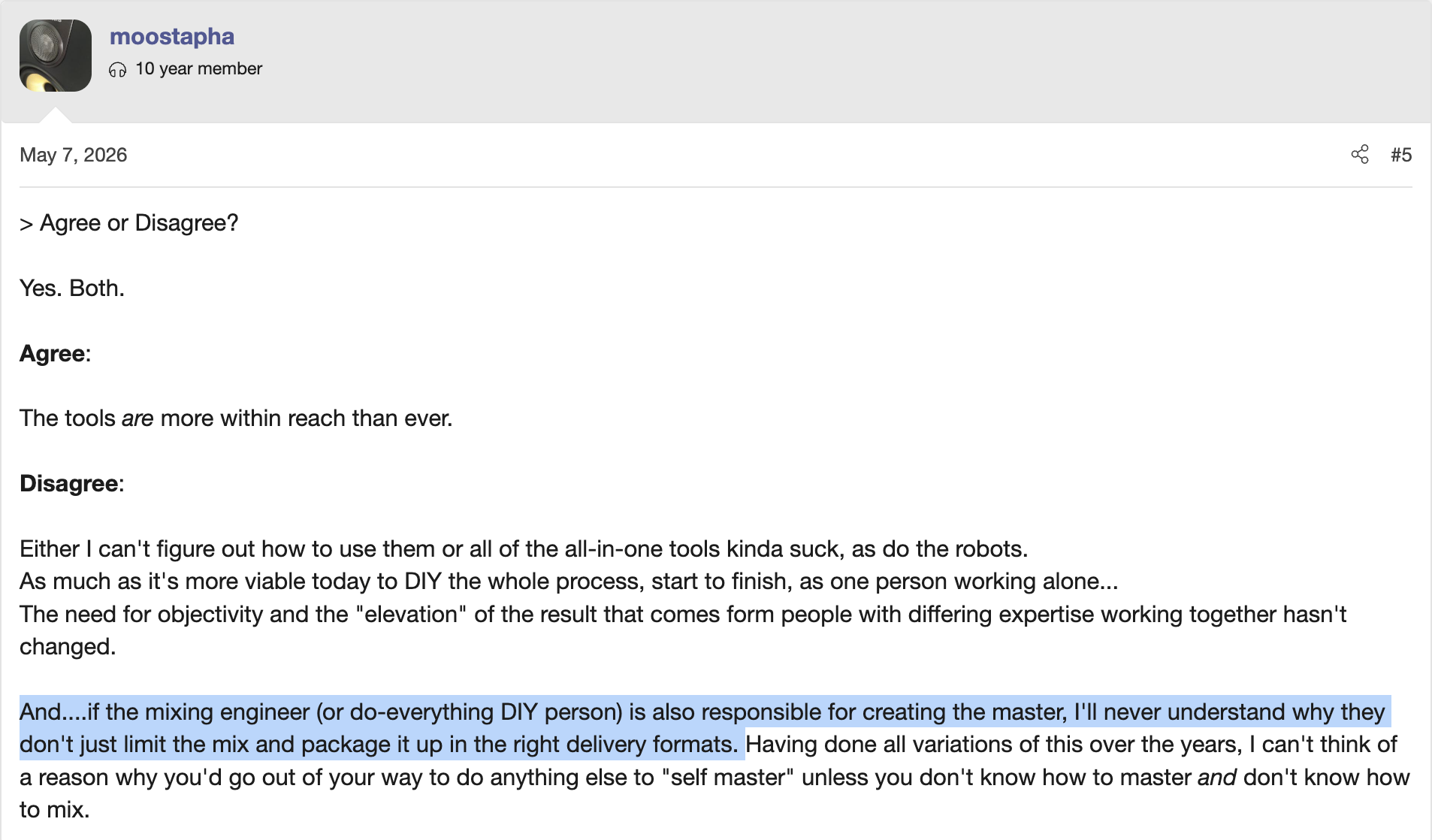
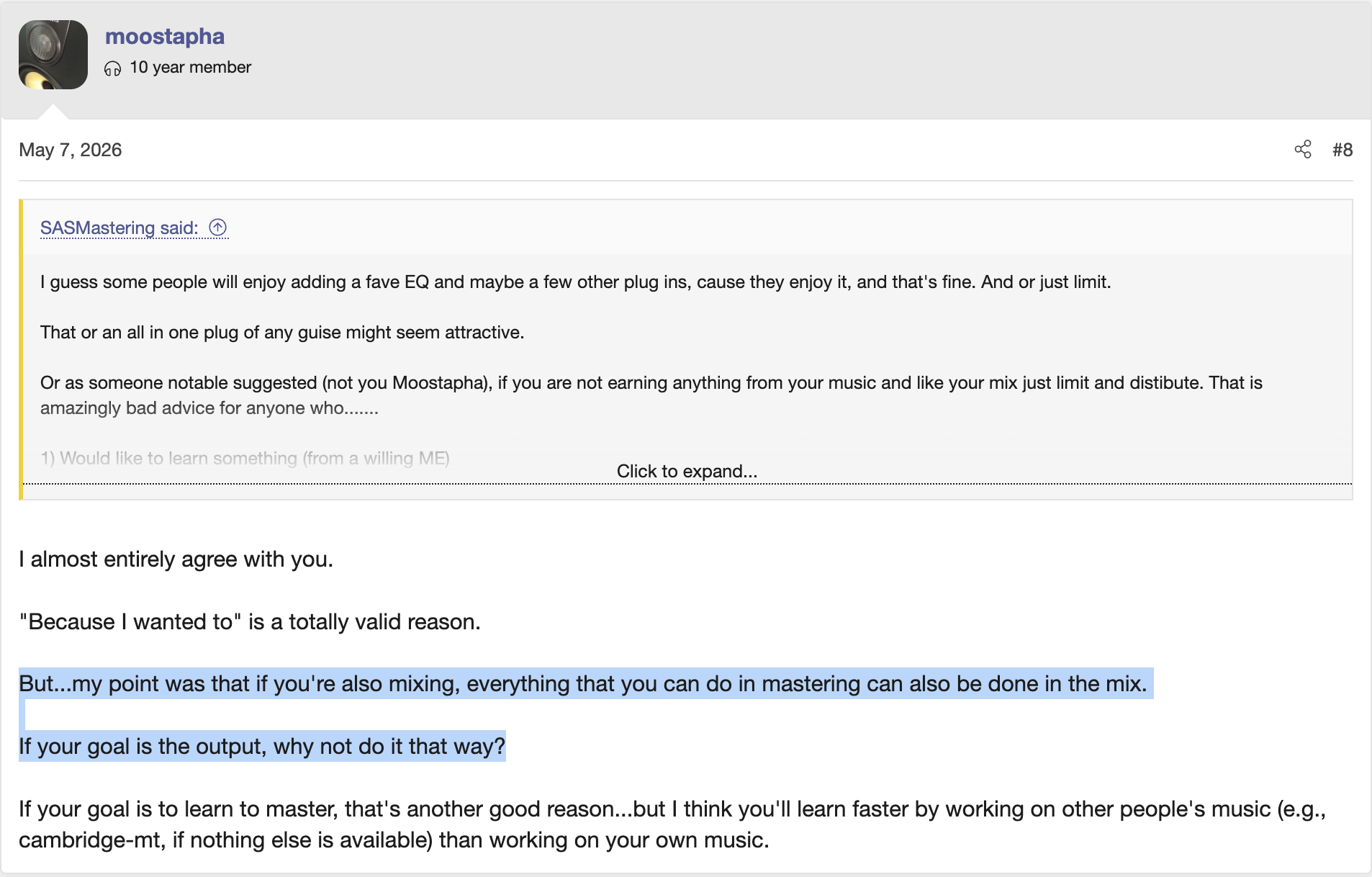
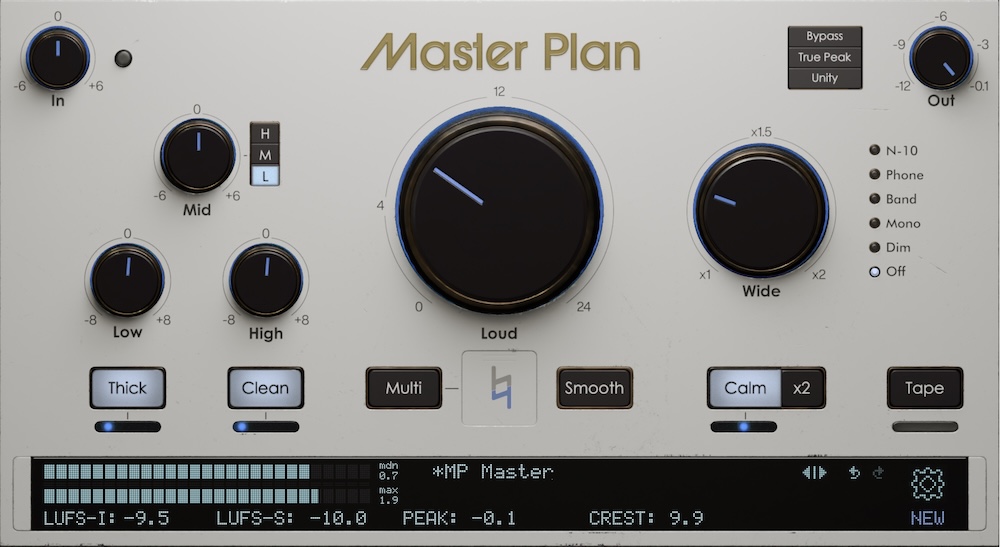
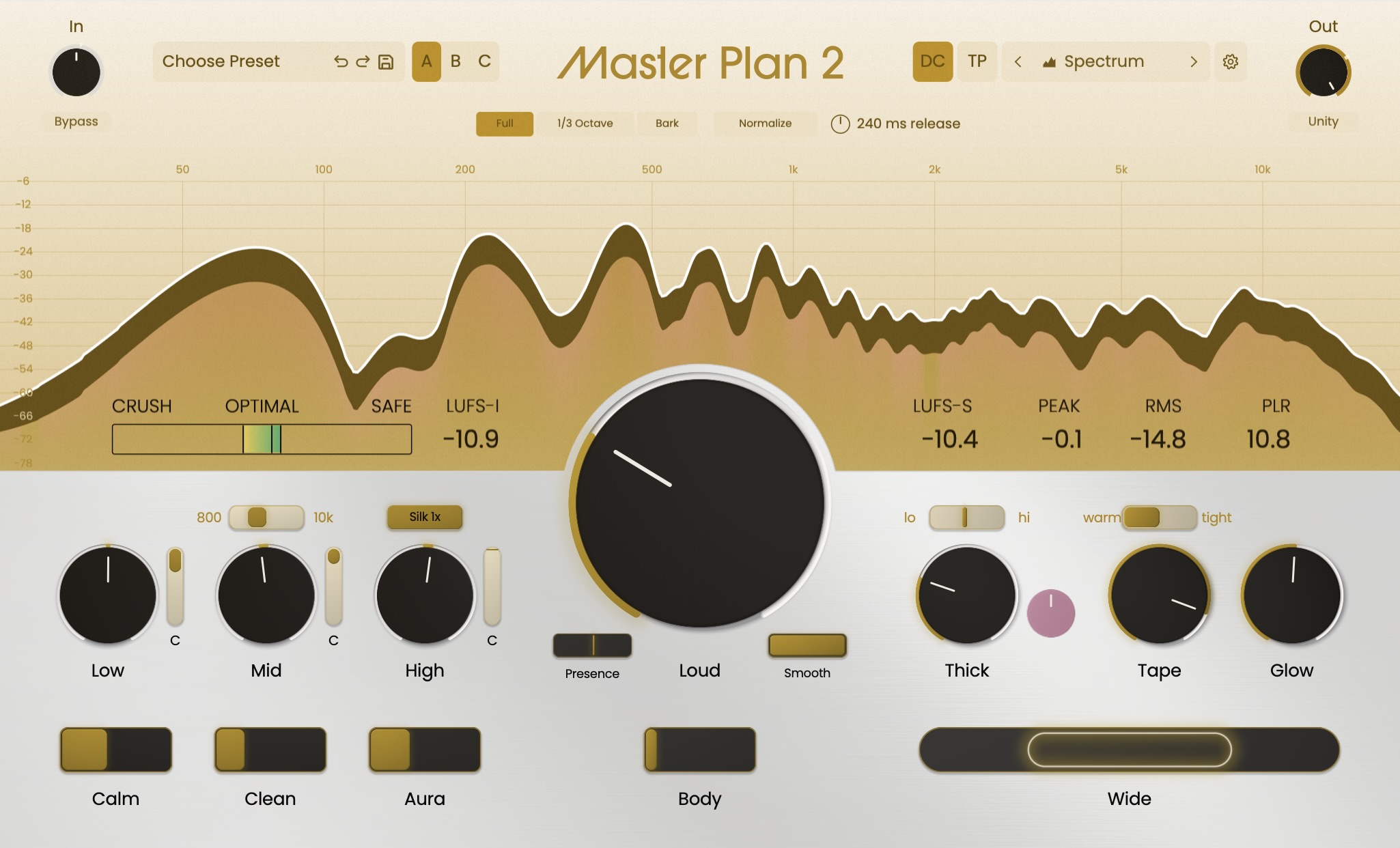
I’m here today to say, Lem, Moose (can I call you guys that?) - you both raise valid points! I’ll start with Moose’s because it’s a little simpler to address. The short version is: sonically, there is no difference between applying “mastering processing” on the mix bus vs. doing it later in its own dedicated session (assuming the settings and source material are the same, blah blah etc etc). A plugin like Master Plan is doing the same thing in either case. You could very well mix and master in the same DAW session and throw that thing up on the streaming platforms. The audio police are not going to arrest you.
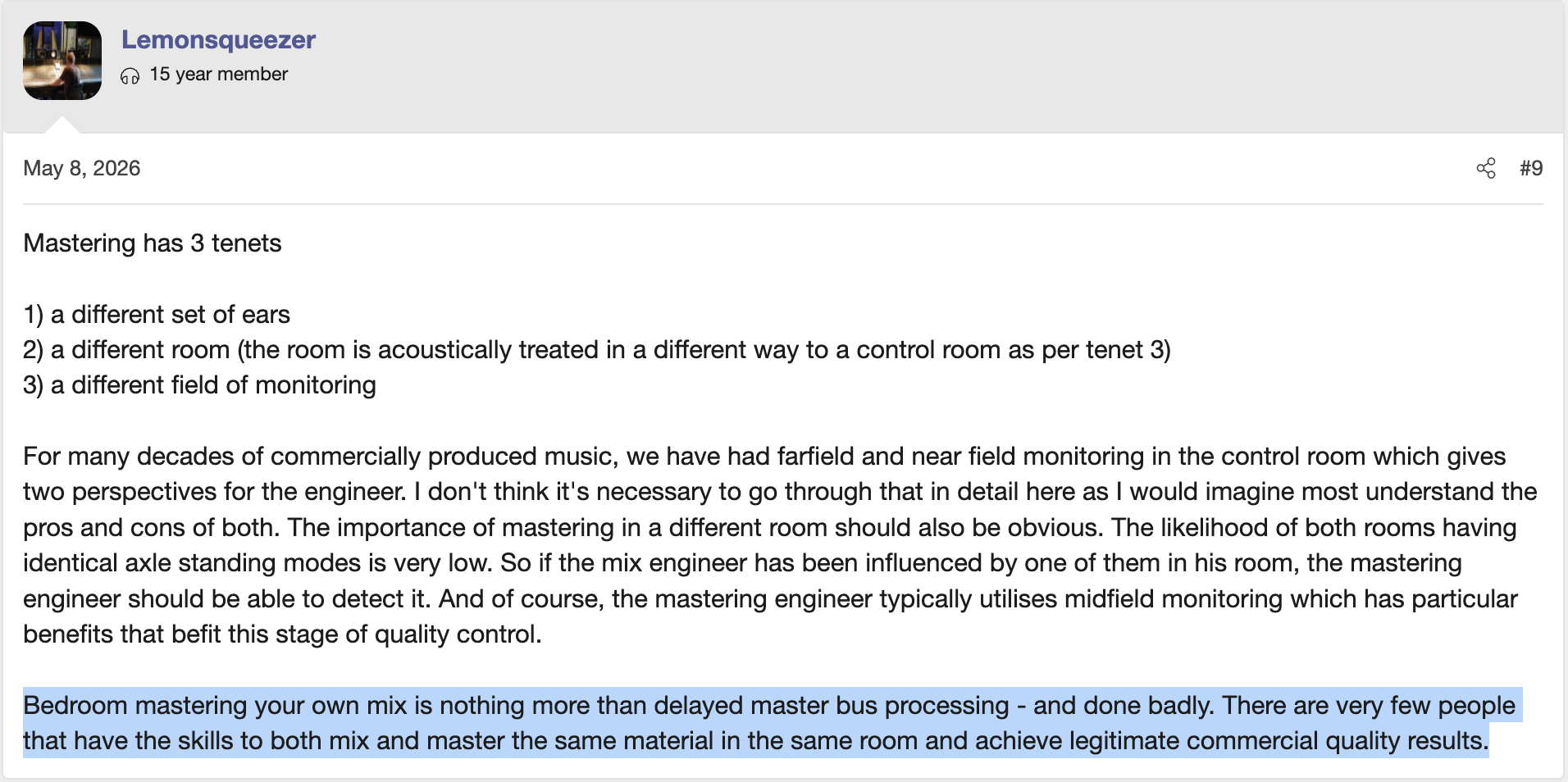
While I think Lemonsqueezer missed the point of the article - and maybe could stand to go for a walk or get a massage or something - they do raise concerns that seem to be common among members of the mastering community. Specifically: mastering is about more than just processing. Like all of music production, it’s about the ears, perspective, and experience of the person doing the work. Plugins and outboard gear are just tools.
That said, while users like Moose could absolutely save time and do their mastering in the mix session, there’s a good case for exporting a mix and mastering it separately.
To Lem’s point, carving out some perspective can be really helpful before shifting gears from mixing to mastering. This is especially true when you, the producer, have to wear both the mixing and mastering hats. (Actually, depending on the hat, you should maybe take it off before doing either one - they can affect what you hear!) Take a beat, come back on another day with fresh ears. Compare your recording to commercial masters you like and focus on bringing it closer to that sound. It can be easier to do this when we’re not also thinking about levels and processing at the individual track level.
There’s one other concrete reason not to master in your mix session: mastering is the final quality control step for the release. If your release is more than just a single song, you’ll want to evaluate the whole batch together. It’s really hard to do that well if you can’t directly compare the songs and listen in sequence.
When it comes to my own music - which I have typically written, performed, recorded, and mixed - yeah, I hire a mastering engineer. My perspective is gone after all that, and I really do need an outside set of ears. But when I’m checking those mixes in my car - or passing along my references to the engineer doing the final master - you better believe I use Master Plan. Why? Because it sounds good and it’s easy to use. Were you looking for something other than that?