


The attack and release behavior of a compressor is often the real core of its personality. Can we agree that compressors have personalities? I like to imagine the Fairchild 670 as sort of a “no wearing white after Labor Day” traditionalist, or the ELH Distressor as an energy-drink-chugging overachiever, knee-deep in side hustles and rarely seen sleeping. I could keep doing these all day, but lucky for you I’m going to stop with just one more – our own FUEL plugin. Its personality? Maybe your new best friend.
On the surface, FUEL doesn’t present as a compressor. To be sure, FUEL is a loudness maximizer and saturator, with the component parts of those functions split out into separate controls. Among those controls is – you guessed it! – compression. Where vintage compressors, like the aforementioned Fairchild or famous sonic destroyer, the UREI 1176, invited users to coax saturation and loudness through creative abuse, FUEL basically reimagines this process upside-down. The loudness and grit is the goal, and dynamic leveling is just one step in getting there.
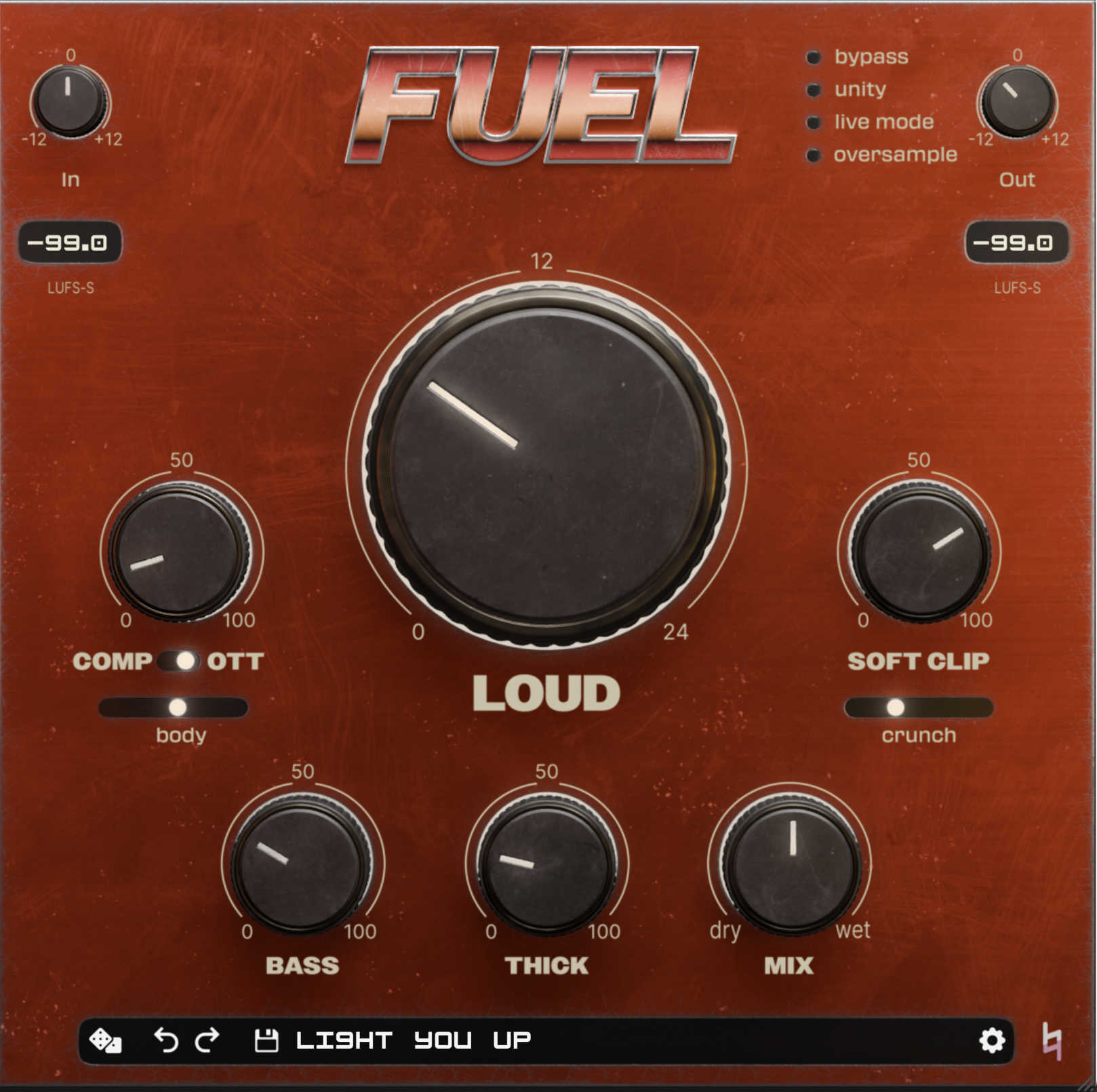
That COMP knob isn’t the big one in the middle (that would be LOUD – give the people what they paid for!), but it’s a big part of getting this plugin to really cook for you. The good news is that this part of FUEL is stupid-easy to use. A knob, a switch, a slider. Don’t overthink it.
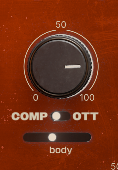
Remember how I said the attack and release are often the core of a compressor’s personality? Well, the bad news about that is that these aspects of compression are frequently misunderstood by users. The good news is that FUEL basically handles this part for you. The timing of FUEL’s COMP is ultra-fast, frequency-dependent, and basically custom tailored for transparency. While it’s true that many of those beloved hardware compressors are prized specifically for their lack of transparency – with sonic coloration being a big part of the price of admission – FUEL is no slacker in that department, either. Where vintage hardware might have you creatively subvert its control panel to introduce saturation, FUEL just puts it on a knob for you. Actually, it puts it on a few different knobs (and a slider) depending on the flavor of saturation you’re after. This is a real “have it your way” situation here.
Let’s leave those aside for a moment and focus back on COMP though. Crank it up just a bit to tame transients, or higher to really crush things. You might notice as you turn that knob that there’s a decided lack of pumping, even when FUEL is working hard. That’s no accident. If the compression isn’t extreme enough for you, that’s when the body slider comes into play. body introduces upward compression that will bring out those quiet details, like the decay of drums in a room, in the way that extreme settings on other compressors might. It might even get you to “pumpy” territory if that’s what you’re after.
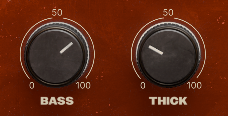
And of course, if this all isn’t gritty enough for you, that’s when those saturation controls come into play. BASS adds saturation to the low end (and is a great weight enhancer for kick and bass) and THICK fills out the midrange.
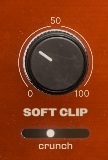
SOFT CLIP adds the kind of character and grime that classic analog pieces are known for. And if you still need more, CRUNCH will take things into truly wild-and-wooly, fuzzed-out territory.
80% of the time, when we reach for compression, we’re going for clean dynamic leveling. In those cases, FUEL has you covered. The other 20% of the time, we’re usually going for explosive tricks to add character to a track - and guess what? FUEL has you covered then too. Pretty cool, huh?