

Here’s an annoying reality of music production: things tend to sound better as they get louder. The science of that statement is actually a little more complicated - nothing sounds “better” at ear-splitting volume, slightly-too-loud volumes make our ears get fatigued sooner, etc. - but the basic principle holds. When given a choice between a sound at low volume and the same sound at a slightly higher volume, the louder option sounds fuller, crisper, and just better.
Why, exactly, is this a problem? Well, because as producers and mixers we are forced to make many small, individual choices that cumulatively add up to big ones, which impact the sound of the music we make. And if we make every single choice, or, hell, even just a lot of choices, based on our perception that louder sounds are better sounds, then we’re in trouble. If the only thing you needed to do to make a great-sounding recording was crank the volume, then everyone would have a Grammy.
It’s very easy to get lured into setting effects based on their increasing the overall level of the track being processed. Compress that vocal - ooh, yeah! Saturate that kick, add some 80 Hz - sounds great! Did you happen to notice that you doubled the volume of each of them? The risk of working like this is a recording that slams the mix bus, stays in the red, and sounds flat and lifeless as a result. We’ve all been there. If you hadn’t been there, you probably wouldn’t still be reading this.
How then, if we’re so hard-wired to choose the louder option, do we subvert our monkey brains and make enlightened choices while working? The answer is: perspective. When we’re EQing something, we’re going for some kind of change in the tonal quality. Compression controls dynamic range, sculpts transients, adds “glue,” “warmth,” “punch” - whatever those terms mean to you. We use saturation to add richness. All of these types of signal processing change sound in essential ways. All of them also have the potential to simply make things louder. So all of them require us to maintain perspective as we use them, to be able to discern whether they’re actually making things sound better or simply cranking the gain.
To maintain perspective when making these kinds of choices, keep an eye on the output of your plugins and adjust accordingly. If the loudness is the same when it’s on and when it’s bypassed, then we can really say whether or not we like what it’s doing. Switch it off, hit play, take a listen; bring it back in, listen again. Like what you hear? If the answer is no, keep tweaking until the answer is yes.
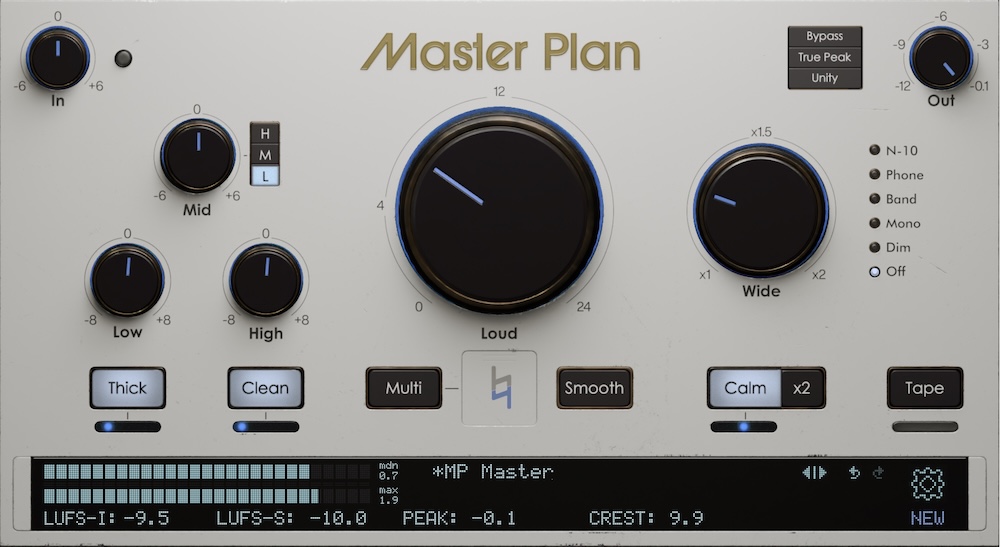
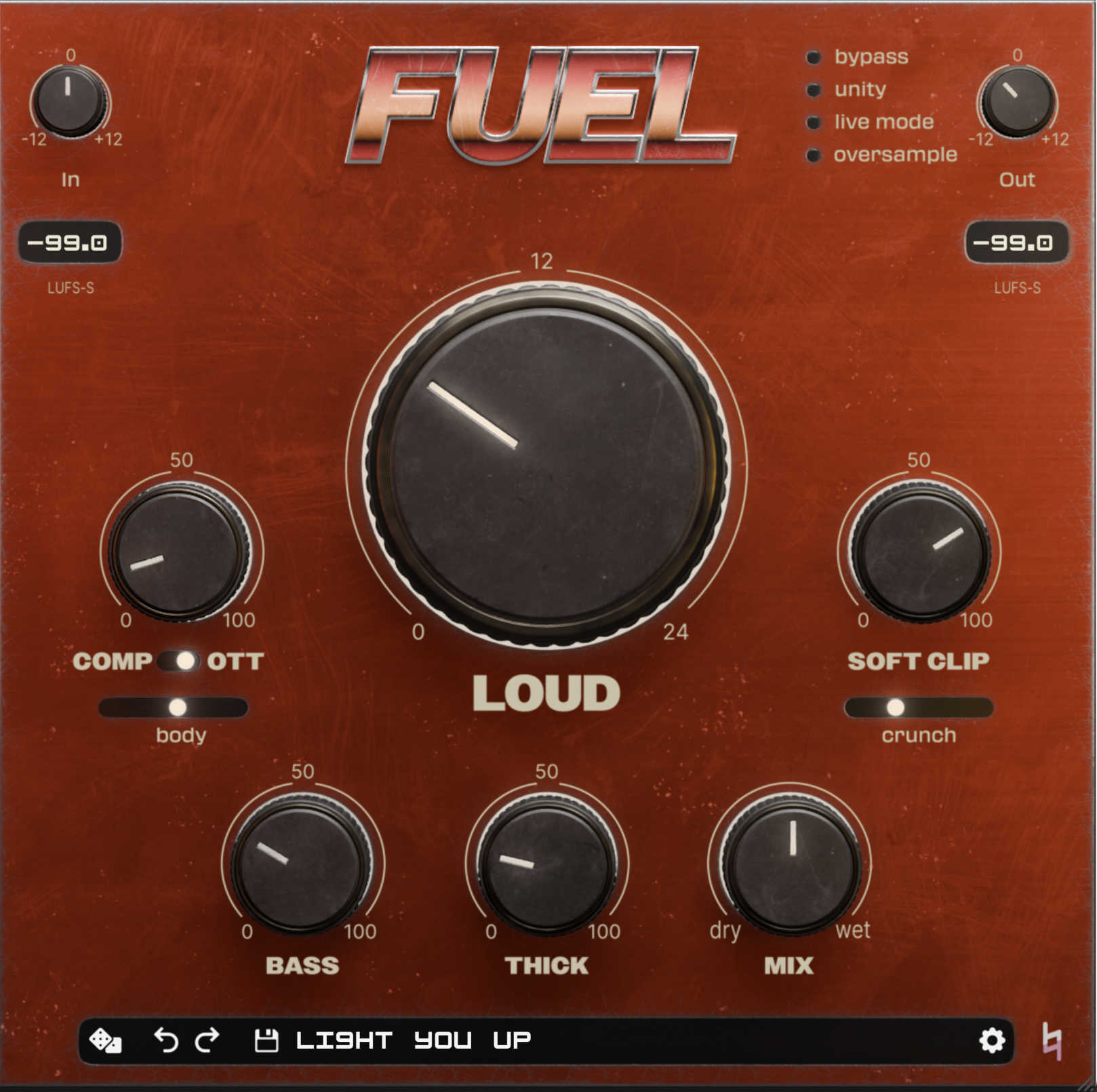
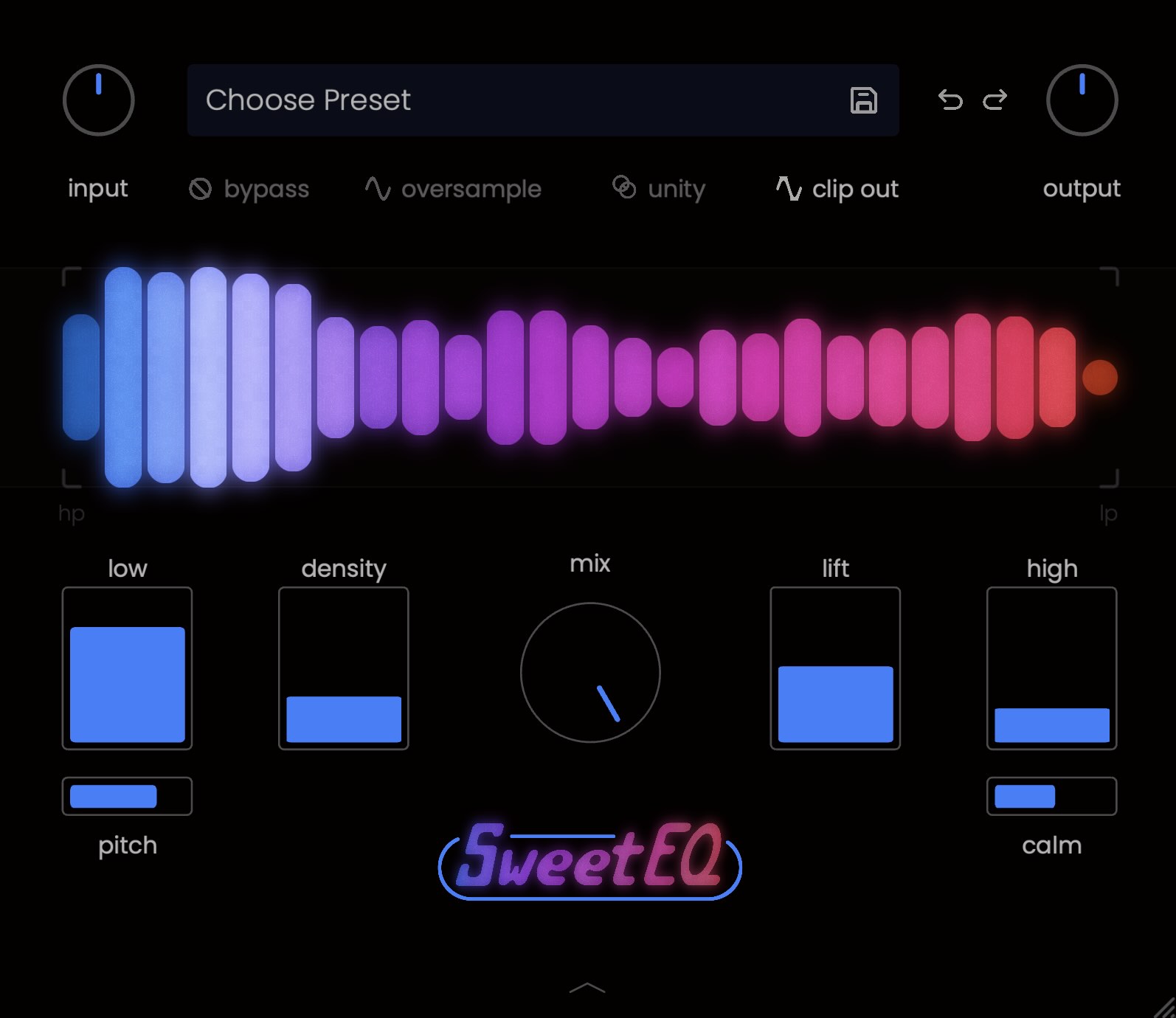
At Musik Hack, we’ve put some thought into all of this: we know that checking yourself is crucial, so we’ve included “unity” controls on all our plugins, because while loudness is sometimes the goal, each of these plugins also shapes sound in ways that vary from obvious to subtle, and that sort of tone sculpting deserves to be judged on its own merits, without loudness getting in the way. We make this kind of workflow very, very easy, and it saves a ton of time. Here’s how:
Turn on unity, then listen while toggling bypass, and tweak to your satisfaction. When you’re done, switch off unity and let those babies cook. That’s what we’re all here for anyway. I’ll see you at the Grammys next year - look for me in my sleeveless tux. Oh, and bring your earplugs.