


Nothing says “polished vocals” like crisp, exciting, well-defined high end. Also, nothing says “amateur production” like vocals that are brittle, thin, or harsh (…besides maybe cartoonishly too much reverb, but that’s a different article).
I think everyone who has ever worked with audio has, at some point, gotten pulled in by the siren call of adding high end to a vocal and wound up overdoing it. We just like high frequency content - it makes things sound present, clear, and defined. High end detail is a major part of what we perceive as fidelity in a recording. It can give a vocal an intimate feeling, like the singer is inches away from your ear, and it’s a non-negotiable aspect of a lot of pop vocal production.
But overdo it? Yikes. Wow, do we hate listening to a recording with over-spicy high end. Thin, harsh… turn it down! Nobody wants to hear that about their production. We want crisp and defined, yet highly crankable. How do we strike this balance of highs that are just right when you’d just swear that every extra dB you add on that high shelf sounds better and better while you’re dialing it in?
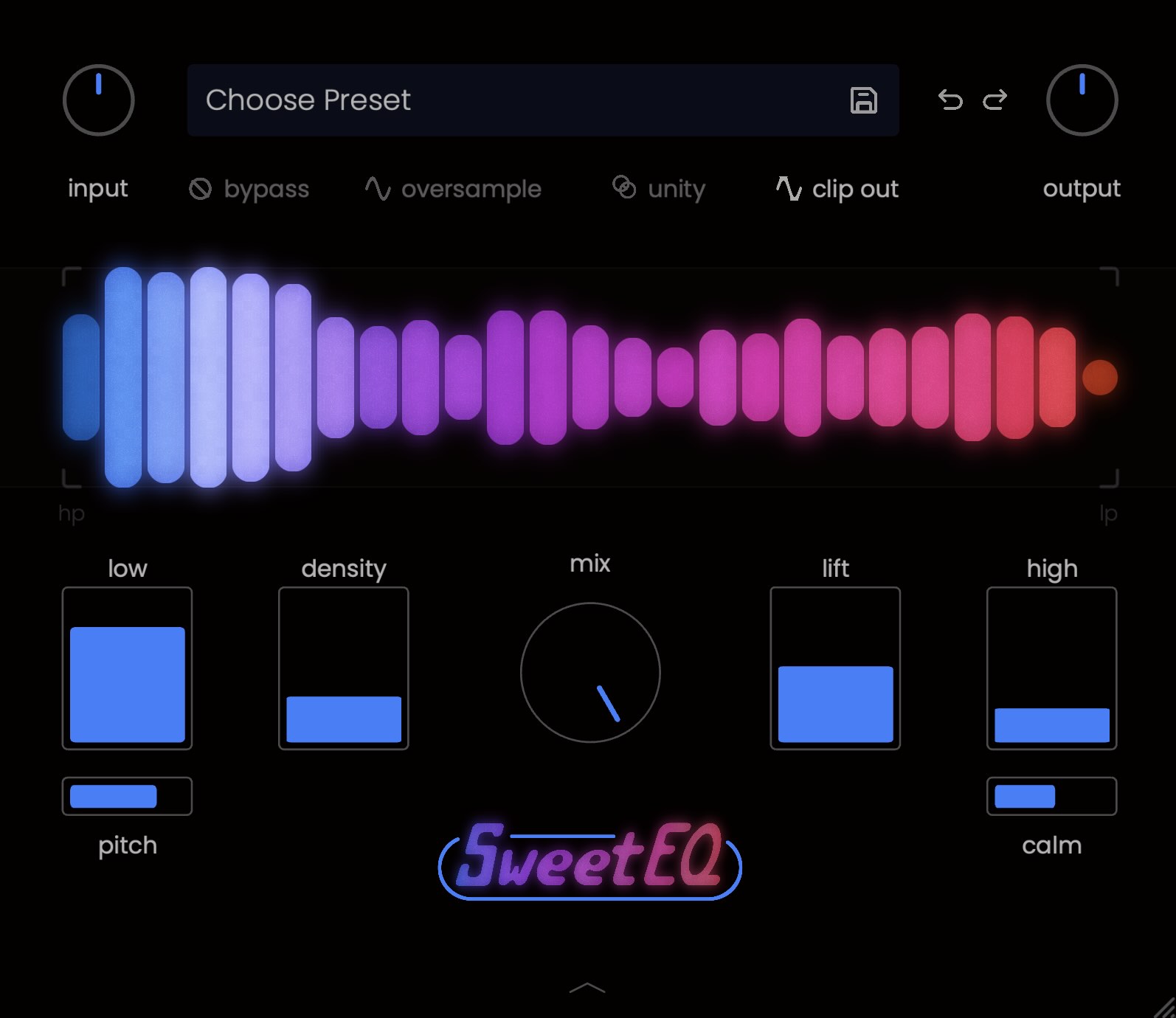
Before I get into that, let’s define just what we’re talking about with these “high frequencies.” Really, we’re dealing with two broad bands of the frequency spectrum - upper midrange (between ~2 kHz and ~6 kHz) and true high end or treble (~6 kHz to ~20 kHz, or higher if you’re a super-intelligent dog who is somehow reading this). The exact numbers might vary from case to case, but those two bands are where we tend to find qualities like “presence” (upper midrange) and “brilliance” (treble). Our SweetEQ plugin has two bands that correspond here - “lift” and “high” - and we’ll be getting to those in a moment.
So back to the question of: how to hit the sweet spot with high frequencies without overshooting? Part of the secret is understanding that not all high frequency content is created equal… and tools to boost highs are most certainly not all created equal. Part of what makes SweetEQ unique is that although “EQ” is in its name, it’s actually a multiband saturator. What that means in practical terms is that where a typical EQ’s high shelf or midrange bell boost would be simply adding more of those frequencies, SweetEQ makes them richer.
Add presence with the “lift” band and get more articulate vocals that cut through a mix. Crank the “high” band to add sparkle and air - and balance to taste with the “calm” control, which is there to help keep things out of that “thin and brittle” zone. Little changes to these controls make a big difference, so start slow and use your ears, and play with that mix knob as needed. SweetEQ has earned a permanent spot in my vocal template as a finishing EQ. A little touch of these two bands can take a pretty dull vocal and make it sound like a million bucks.
SweetEQ is far from a one trick pony, and of course we encourage you to try it all over your mixes. But as an instant vocal “betterizer,” it’s pretty hard to beat - both in terms of how good it sounds and how quickly you can get it there. Slap it on your vocal chain and dial in some shine.