

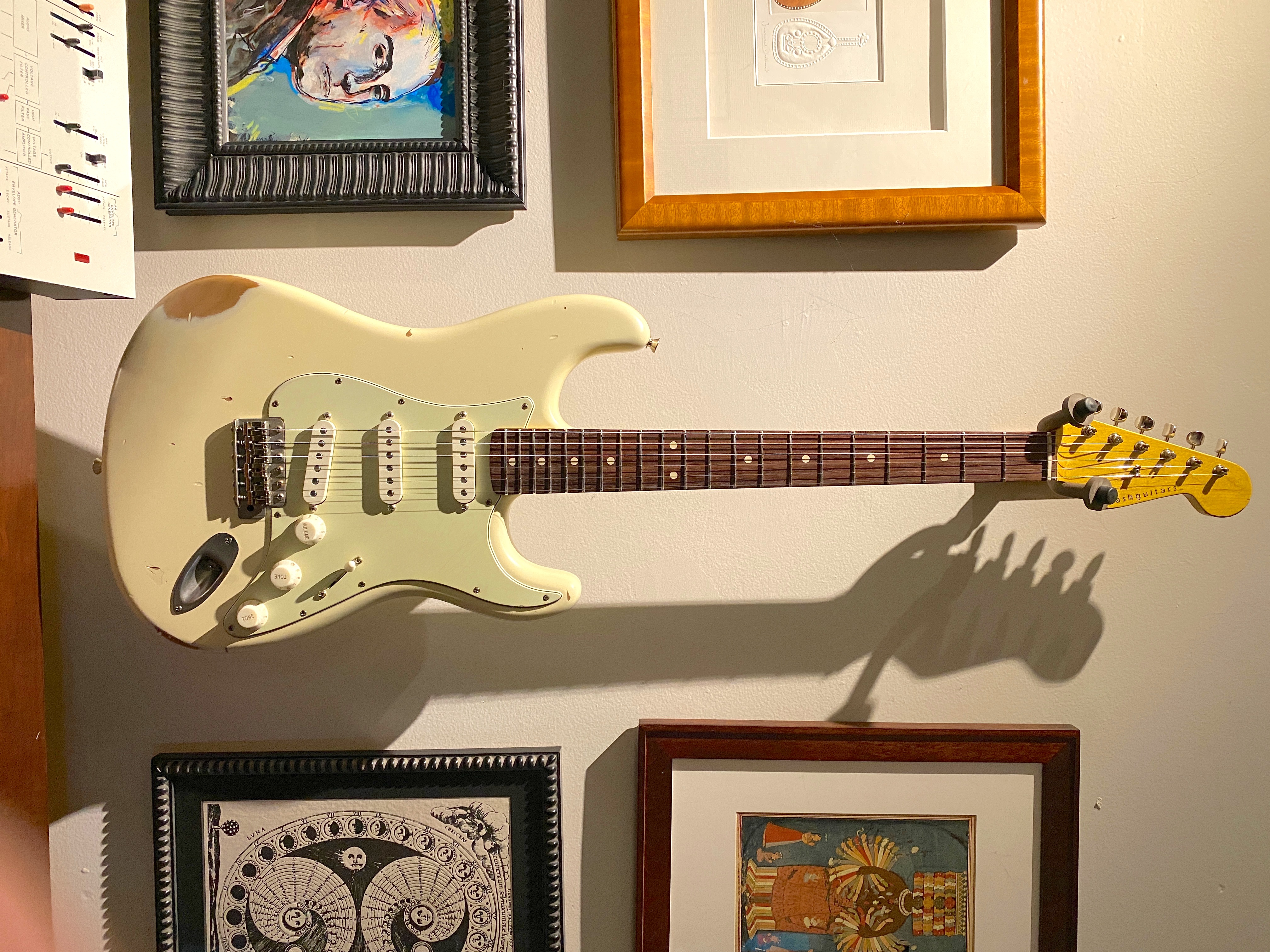
Guitars are a very midrange-focused instrument. Though the range of a standard-tuning guitar goes down to ~82 Hz - where you might find the meat of a kick drum - we don’t usually need to feel guitars in this frequency range the same way as kick or bass tracks. Great - low end negotiation can be tough and guitars are not vying too hard for this prime real estate. Similarly, guitars don’t really have a whole lot of high frequency information, either. True, acoustic guitars do have some sparkle to them around 10 kHz and above… but boosting there can make them thin and brittle. And electric guitars? Their frequency output starts to roll off well south of there, often around 5-7 kHz. This is also good news - guitars don’t have to compete with cymbals and other instruments that need airy frequencies in a mix.
The thing with mixing guitars is that the frequencies they do need - for fullness, weight, or presence - are some of the same midrange frequencies that are most crucial for vocals. Some guitar parts inherently sound good a little thinner - think funky rhythm guitar playing, for instance - so this is less of an issue. But a lot of guitar parts, especially distorted rhythm guitar tracks, need exactly the same frequencies where we find the fundamental notes of vocal parts and crucial early harmonics. This can create problems. Maybe you’ve encountered them.
Though compromise is always going to be a part of music production - we’re never going to be off the hook for having priorities or making choices in a mix - there are lots of new tools for getting to satisfying solutions a lot faster than in the past. Our multiband saturator, SweetEQ, happens to be one of them.
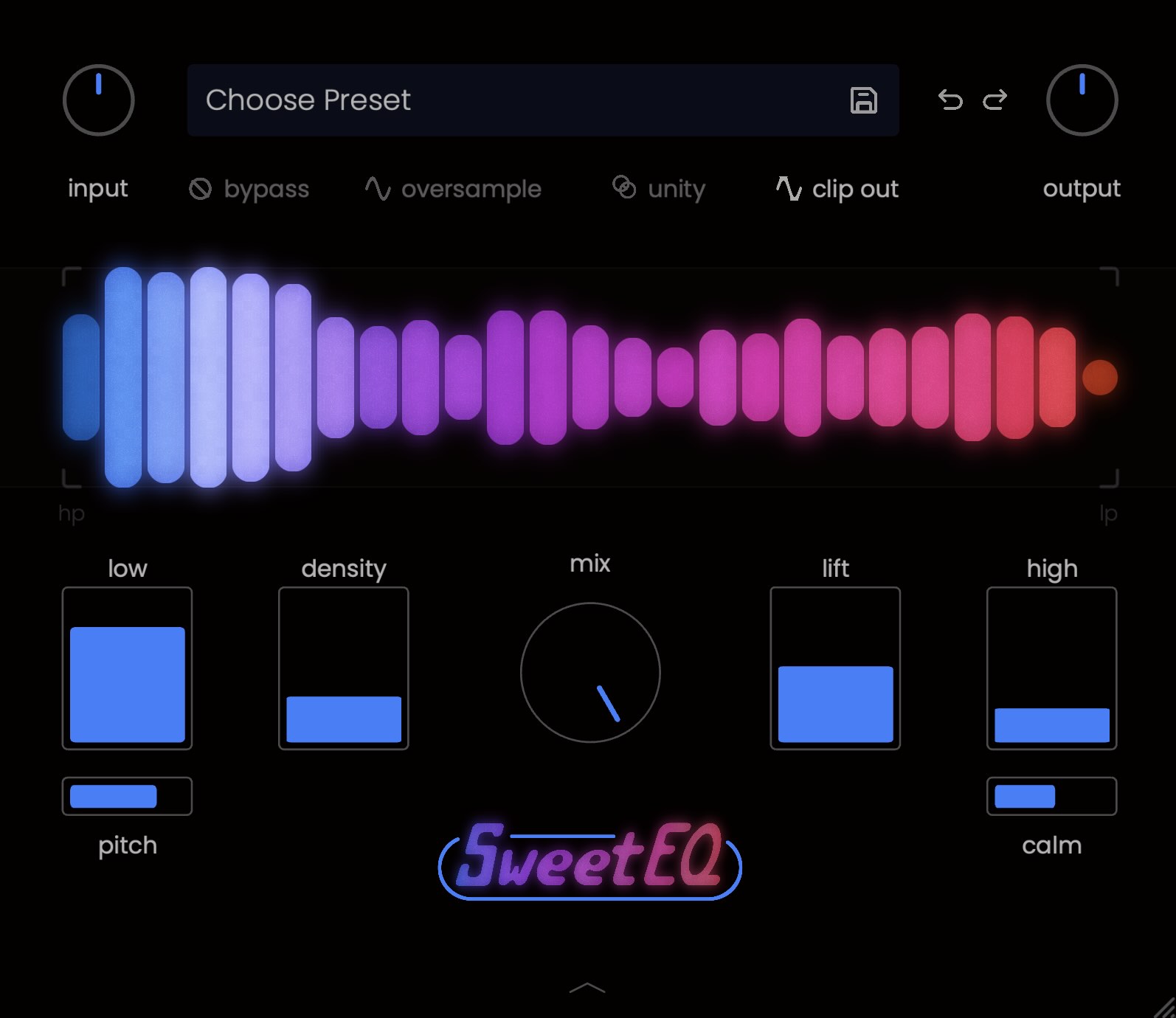
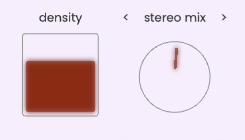
If you’re working with guitars that need weight but might fight with a vocal, try this: load up an instance of SweetEQ on your guitar tracks and bring up the density. Listen to what it adds. Because SweetEQ is a saturator, it doesn’t just give you more midrange - more is what a traditional EQ would do, more is what creates worse competition with vocals. No, the midrange becomes, well, denser - thicker, fuller, richer. Y I often like to go heavy with this kind of saturation and then back off the mix knob:
ou can get especially surgical with this by switching the cut control to blend mode and tailor the band the effect will be working on, filtering out extreme lows and highs for a more focused effect:
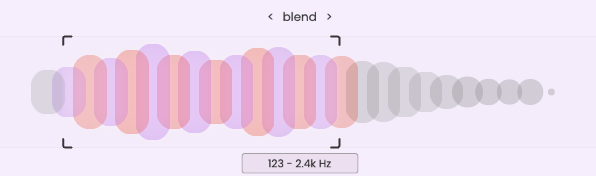
Working with saturation in this way tends to sound a little more musical than straight-up boosting a band on an EQ would, because saturation tends to work dynamically to enhance what’s in the part, rather than simply raising certain frequencies. Of course, once I start tweaking those controls, I find that a little lift sounds good too, enhancing the guitar’s ability to cut along with the added weight:
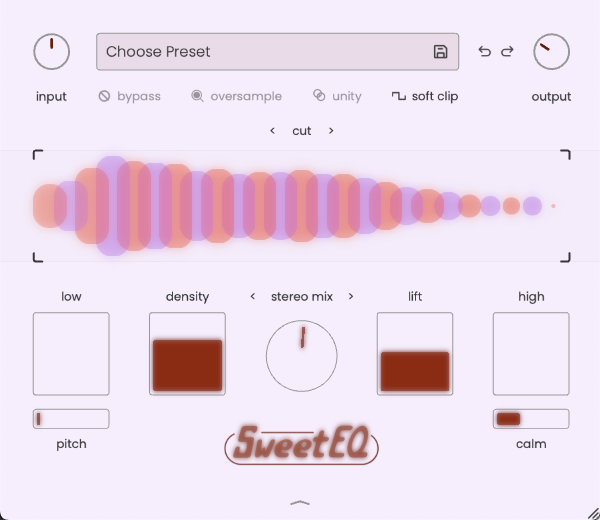
As always, I’ll check these settings by switching on unity - letting me know that I actually like the tonal changes and didn’t just make the track louder. Oh, and how about that? They sound great. Give it a shot and see for yourself.