


Did you know there's no single "correct" way to reconstruct a waveform from digital samples? It's true. That's why you can use the Digital Audio Converter (DAC) that ships inside your laptop, or spend $10,000 on a Denafrips Terminator (rich as you are, I'm not saying you should or shouldn't). Audiophile components aside, let's talk about what this means when it comes to "true peaks."
Theoretically (people will say) you can imagine a sine wave being sampled. If the highest point of the sine wave doesn't have a sample directly on it, people might say, "oh, that means the waveform exits the allowed range and clips!" Technically, sure. Practically, what does it matter? We'll get to that.
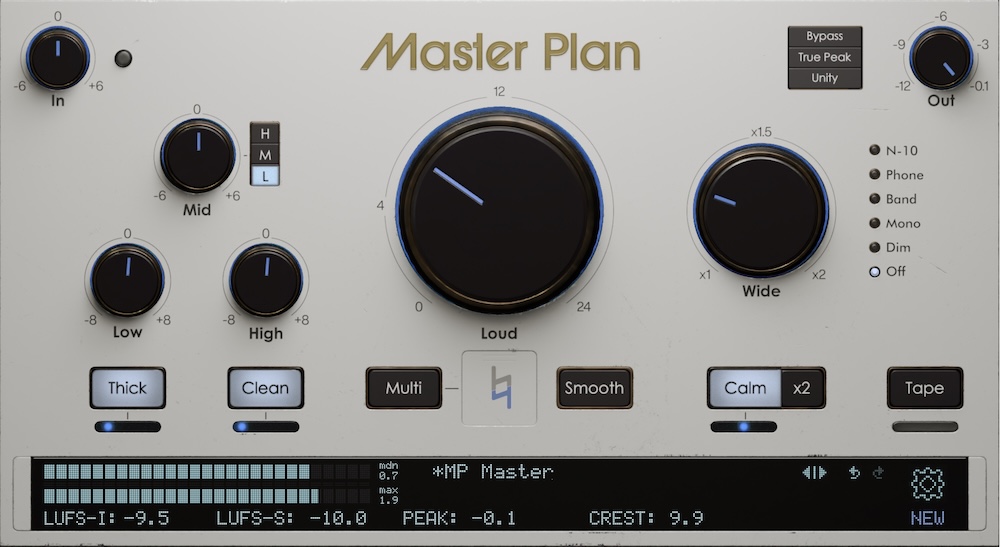
First I just want to come out and say it: the concept of true peaks as important grew to really piss me off. It makes me irritated whenever anyone brings it up. Perhaps I'll end up like Shishupala, and be liberated by the holiness of my total devotion to trashing them. Let me tell you, I tried working really hard at understanding how to stop them in 2022, only to find out about the time we released Master Plan that the majority of mastering engineers simply didn't care about them. So what's going on?
First of all, any DAC worth its salt has headroom, because this is something DAC designers have known for a long time. And the reason they know this, is that these designers also know that they use filters in their DAC designs. And those filters have what is called overshoot. Overshoot is a phenomenon that occurs when you remove (or add) energy from the waveform. Since you're removing high energy in this case, you cannot represent sharp edges in the waveform (sharp edges indicate very quick movement changes, which in turn indicate very high frequencies). When that happens, you're left only with lower frequencies when trying to make the as-same-as-possible shape, which results in oscillations called the Gibbs Phenomenon.
In essence, DAC makers know that the filters they're making in the DAC have to reconstruct the waveform, and when they do this, they know that they have to account for these ripples so that their DAC doesn't clip. This is also one of the ways DACs got better over the decades: their makers got way better at filter design, and compensating for those designs. They also developed new methods, but most newer methods like Delta Sigma still involve low pass reconstruction filters. When we're talking about reproduction here, that headroom is usually more than enough to take care of that errant peak missing in the sine wave. An astute reader would ask: hold on a minute, are you saying that the Gibbs Phenomenon caused by the filter is somehow more important than true peaks that might be lurking in my audio? We'll get back to that in a minute.
First, some direct quotes from the standards bodies:
- In general, the higher the frequency of the peak-sample metered signal, the worse the potential error (AES-R7)
- TP meters still have a max under-read up to 0.6 dB (AES-R7)
- …true peak limiting more than about 1dB may produce more audible artifacts than simply letting audio material clip (AES-2023-F)
Yes that's right. Before they get down to it, these documents let you know that true peaks only really matter for rather high frequencies (you know, the ones that aren't anywhere near 0 dB in your mix, that true peak meters "underread" the peaks, and that true peak limiting to any real degree sounds worse than just letting them clip. To understand why high frequencies are the problem, consider a slow sine wave. A lot more of the overall sine wave is sampled, meaning there's less "space" between samples over the course of one cycle. That means there's not a lot of room to misread. At high frequencies, the opposite is true. That's why to find true peaks, you have to oversample. You have to add more samples to cover more of the waveform, so you "miss" by less.
So, how do you oversample? You use filters. I love learning about filters. Oversampling filters, IIR filters, polyphase filters, SEM filters, ladder filters, state variable filters, you name it. But one thing I know is that every filter changes the shape of the waveform differently. I also know that the steeper and higher up towards Nyquist, usually the bigger the overshoot. Oversampling filters are no exception. So, if we have to oversample to measure a true peak how do we know what filter to use? We don't. From the standard: "One set of filter coefficients (for the order 48, 4-phase, FIR interpolating) that would satisfy the requirements would be as follows..." That's right, here's an example, but use whatever. Guess what different filters will have? Different ripple. That's why your meter in Logic Pro vs Brainworx meters vs Ozone vs meter-of-the-day have different readings!
Back to our question: are these Gibbs ripples larger than the true peaks we're supposedly trying to measure? The answer is: they're inseparable. The reading you get is simply how the oversampling filter you choose will reconstruct the waveform. Your true peak meter is basically measuring itself. Nothing "true" about that, unless you love tautologies. In essence, all this is fuzzy, unmeasurable stuff that matters more for the playback system and down-the-line processing than it does for you. That's one of the main reasons given to care about this stuff. But if the people down the line can't be trusted with your music because they might use different filters than you, and there's no precise measurement, and the playback system is the arbiter anyway, what control do you really have over this? Not a lot. Just pick a number, there is no "truth." Maybe it's just a way to sell more meters...
When it comes down to it, I may still put a true peak mode in Master Plan 2, because some people don't have a choice: they're given technical requirements, and they have to meet them. But there are all sorts of other silly things people say about measurements and loudness, and if you want to know my full take, you can watch my talk at ADC. But until then, it's probably worth ignoring things you can't even hear.