

Null tests are an oft-misunderstood test people use in order to try to understand what a plugin or other piece of gear is doing. The problem is that most people I see doing null tests do not understand what the results mean! In this post, I'm going to describe what null tests are, how to interpret the results (and what you cannot interpret), and some tricks for plugins that don't null well.
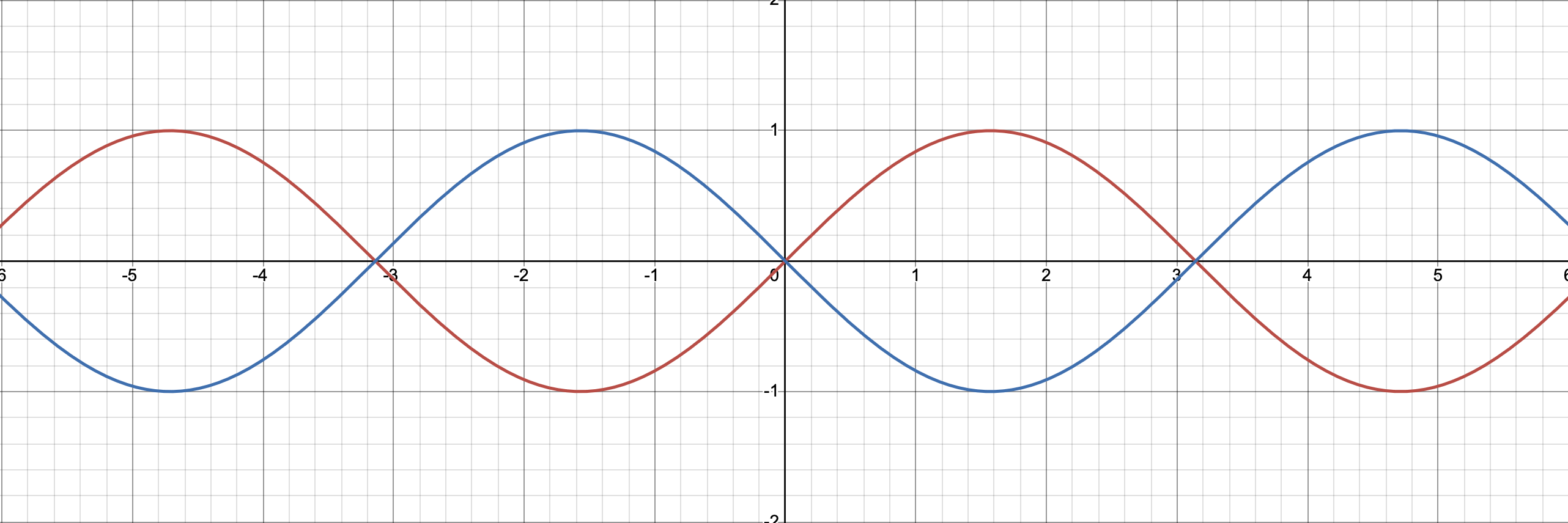
First of all, what is a null test? Basically, if you have two signals that are the opposite of one another, then add them together, you will get silence. To get the opposite of a signal, you flip it... in other words, you invert the polarity. Most hosts have this in one way or another; in Pro Tools or Reaper it's built into the channel strip, but in other hosts like Logic, you can add a gain plugin at the end of the list of plugins and click the polarity icons for both channels in the plugin. Polarity switches and icons generally look like a 0 with a slash through it. For every 0.3 in the normal signal, you have a -0.3 in the polarity-inverted signal. Add them together: 0.
There are a couple of ways to set this up in the host. One way is to create two channels, put the same audio in both of them, then the plugin you want to test in the second one, and invert its polarity. If you run both of them, you can change the settings in the plugin and hear the "difference." Another way is to send one track to two separate buses, one with a plugin and polarity inversion and one without. But what does the "difference" mean?
The result of a null test tells you if the signals are exactly identical. If you hear audio output, that means that something is different about the energy you hear. That means the energy could be additional energy, or removed energy. Adding high energy and removing the same amount of the same high energy would sound the same in a null test! That also means that if you hear a lot of stuff going on, you have no way to determine what's being added and what's being removed.
On top of that, null tests are reactive to phase changes in the signal, which is a very subtle thing that happens not just in digital minimum phase filters, but all analog filters as well. If a plugin has a minimum-phase crossover so that it can apply affects to a specific frequency range, you cannot null test it with the original signal; the mostly (or completely!) inaudible phase changes caused by the crossover will show up as audible differences in the null test, even though no energy was added or removed from the signal. These phase differences are one reason why some plugins are not very good when used on sends but work great as inserts! Crazy, right?
Because they're hard to interpret unless you know a lot about a plugin already, I don't recommend using null tests unless you really know what they're telling you, but if you do want to null test a plugin, the best mindset is to assume it has some filters in it somewhere that are affecting phase. To run a null test, save an initial state for the test as a preset, and load it in two copies of the plugin on two different tracks. Flip the polarity of one of the tracks, then change just one control on one of the plugins. This way you can hear what's going on despite any tiny phase changes that might throw off the test.
So remember, just because you hear something in a null test, doesn't mean energy is being added or removed. It could be either, or neither! Try to make decisions based on what the plugin sounds like, not how it measures.