



Brittle. Shrill. Tinny. These are words we hate to hear about a vocal track, but they are exactly what a lot of budget condenser mics might deliver when not handled properly. While I happen to think the tonal qualities of vintage Neumann U47s are just a bit overvalued - say what you will, but they just don’t flatter some voices - I do have to admit that there really is something about that smooth-n-creamy mid-forward sonic profile that says “expen$ive” in a way that a no-name condenser off Temu simply will not.
If you’re the producer recording with said budget condenser, don’t take it personal - I’m on your side here. I don’t think that increasing your mic budget by $10-20k should be necessary to record a decent vocal. In fact, I know that it isn’t.
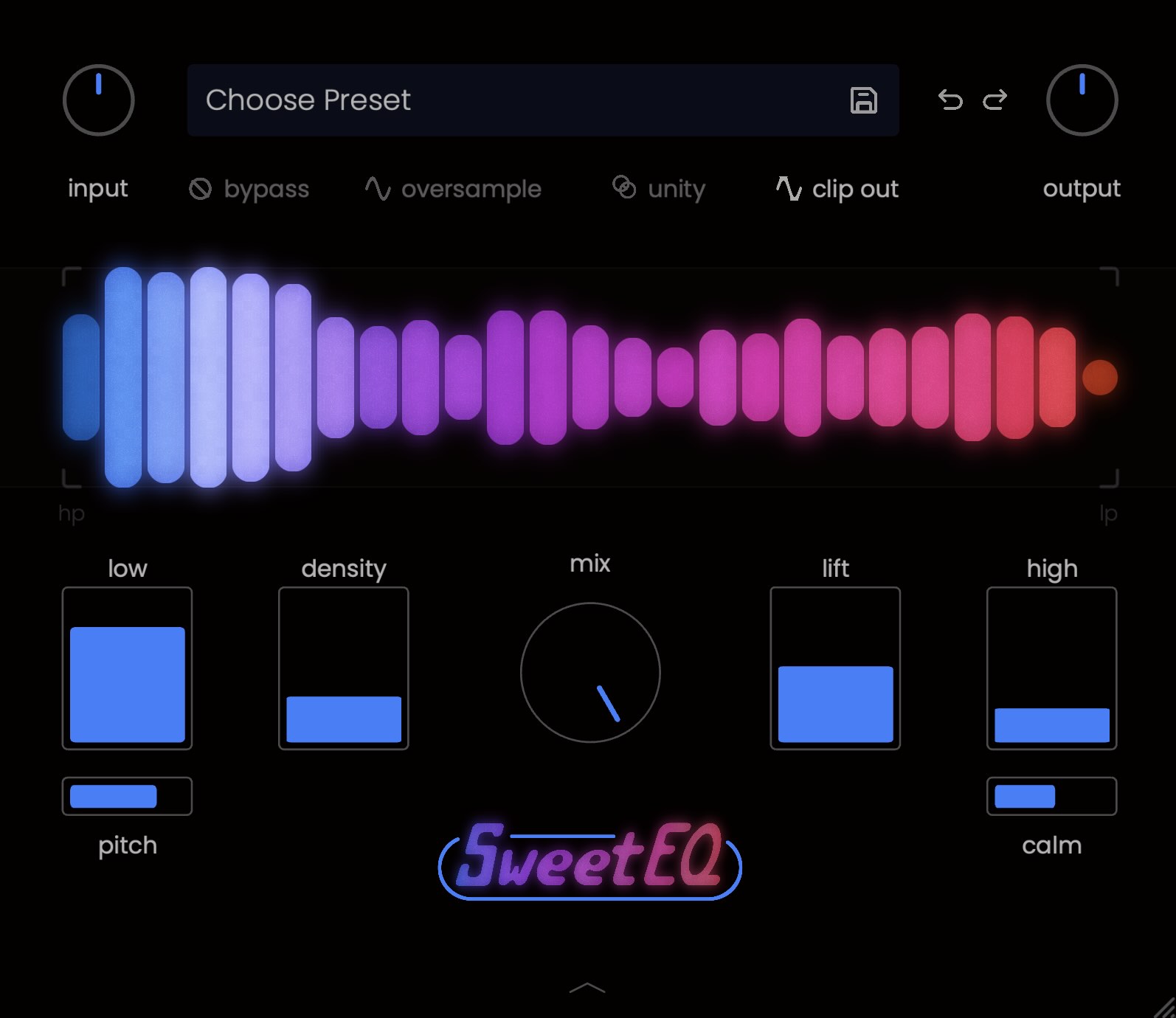
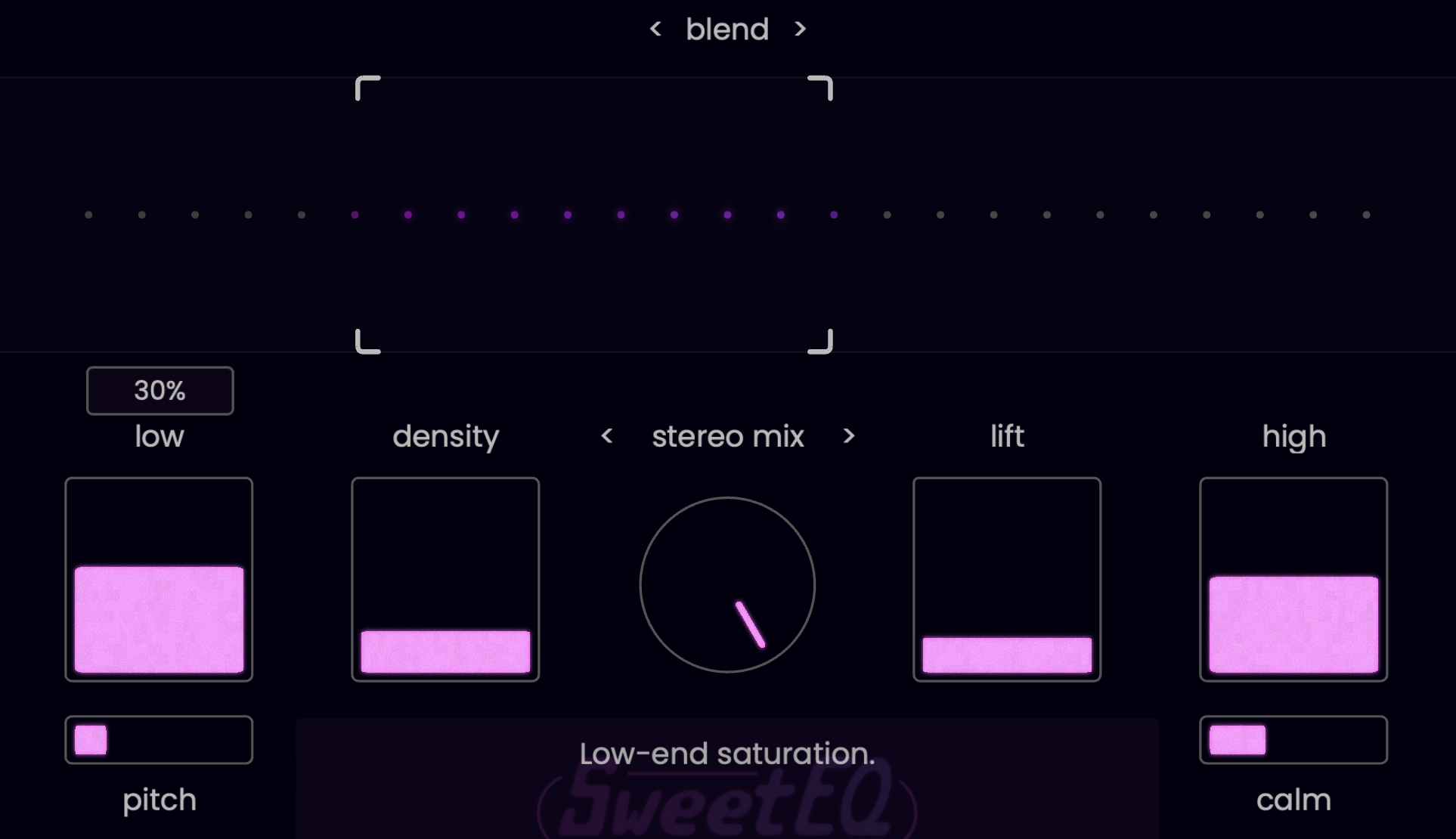
How do I know this? Because we’ve got plugins like SweetEQ at our disposal. Though SweetEQ is nominally, yes, an EQ, there’s actually a little more going on under the hood. It’s more of a streamlined multiband saturator than a straight-ahead EQ, with the most essential functions put right up front and no extra bells and whistles offering unhelpful tweakability. And SweetEQ’s “low” control has the potential to thicken up a vocal in a way that’s easy to understand and even easier to apply.
The thing about adding low midrange with a multiband saturator that sets it apart from a similar move on a traditional EQ is that saturation responds to audio dynamically. Simply boosting 200-300 Hz on an EQ can get wooly, muddy, murky. It can bring out gross resonances and hurt overall clarity, and it has the potential to sound uneven depending on the source material. Saturation, on the other hand, tends to work with what’s in the dry track in a way that can sound more musical, focused, or transparent.
The key to getting it right here is dialing in the sweet spot with the corresponding pitch control. Pitch can be set anywhere from 40 to 500 Hz. The lower part of that frequency band is not the most helpful when it comes to the human voice - the perceived “body” of a vocal will usually sit somewhere between 100-400 Hz, depending on the singer’s range. Keep in mind, we’re not talking about the fundamental of the notes here - this is more about where we “feel” the body of the voice in the frequency spectrum.
Dial in a boost to the low band so you can really hear it, and sweep that pitch control around. Listen for the spot where it sounds full - not boomy, not muddy, not honky - and then dial back the “low” amount a bit, and play with the mix control to taste. Ahh, there it is - thick, classy lower midrange. Body without obnoxious muddy resonances.
Depending on the vocal track, you may of course want to play with SweetEQ’s lift and high/calm controls. But that, of course, would be a topic for another post. Happy mixing!