


Mastering is often regarded as something of a “dark art” in music production circles. You, reader, may feel that it’s confusing, opaque… something best left to “the pros.” A practice guided by a sixth sense that you don’t possess. Spoiler alert: we at Musik Hack don’t buy this. We happen to believe that now, more than ever, great sounding masters are very much within reach.
Before we get into why that is, let’s look at what mastering actually is and where it started. In its earliest, most basic form, mastering was essentially a final quality control step before a record went off to be pressed. It often took place in the same building as tracking and mixing - sometimes even the same day. The core question was simple: can this recording be turned into a commercial product without obvious defects like distortion or a needle jumping grooves? The mastering engineer was more technician than artisan, and certainly not some kind of wizard.
That began to change in the late 60s and 70s, as mastering moved into dedicated facilities with authoritative monitoring systems and bespoke analog signal chains. Mastering engineers began to earn the trust of producers to impart a sonic flavor that was, dare I say, creative. At the same time, new release formats proliferated - 8-track! cassette! CD! Crucially, radio stations also started to apply more processing as they broadcast music - each station with its own chain and its own unique sound.
As a result of these changes, loudness became high-stakes. Records with louder, denser, more controlled masters sounded better in a variety of environments and on more formats - and they sounded better on the radio, too.
Well, guess what? Radio is no longer a dominant force in determining trends in music, and streaming platforms (heard of ‘em?) are much less of a moving target than radio stations were. While streaming services’ -14 LUFS loudness standards are basically suggestions (most commercial masters come in well above) the eternal quest to simply be louder than the last song is more or less done.
So what does this all mean for the art of mastering today? Well, loudness - both measurable and perceived - is still a thing, even if it isn’t the whole thing. And mastering is still the time to smooth out any rough edges left over from mixing. At its core, mastering remains what it always was: a final pass to ensure that mixes hold together in the real world.
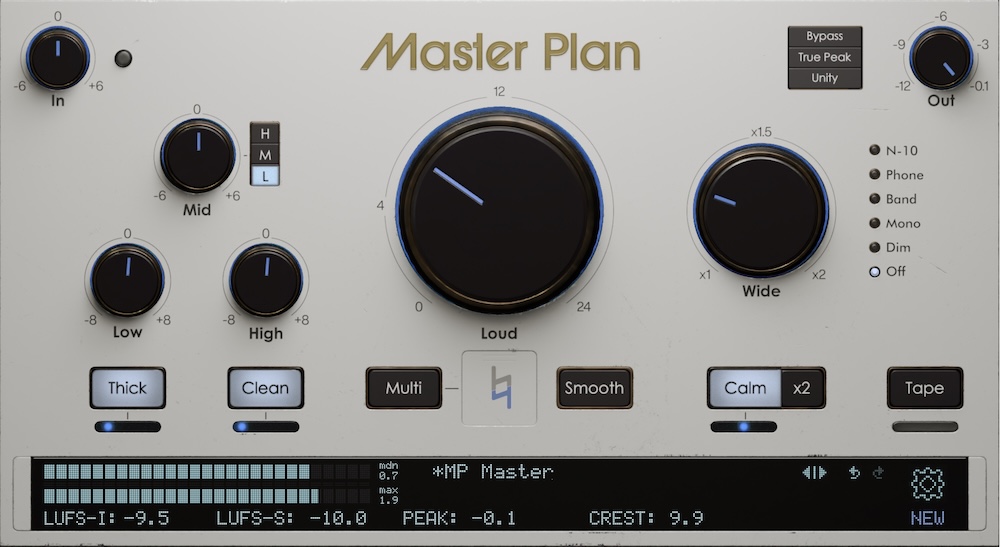
So let’s be real: am I describing some mystical process that only a privileged few get to know about? That requires specialized analog gear? Um, nope. Who came up with that idea, anyway? We have better tools now than ever to tackle these tasks, and *ahem* our own Master Plan happens to handle them like a boss.
Don’t get me wrong - mastering engineers still play an important role, especially when it comes to refining and sequencing an entire album of material. Perspective and experience are essential! But as far as the tools go? Don’t buy the hype - trust your ears. That old model of tracking, mixing, and mastering all under one roof might just be more relevant than you think.